
Quick Read
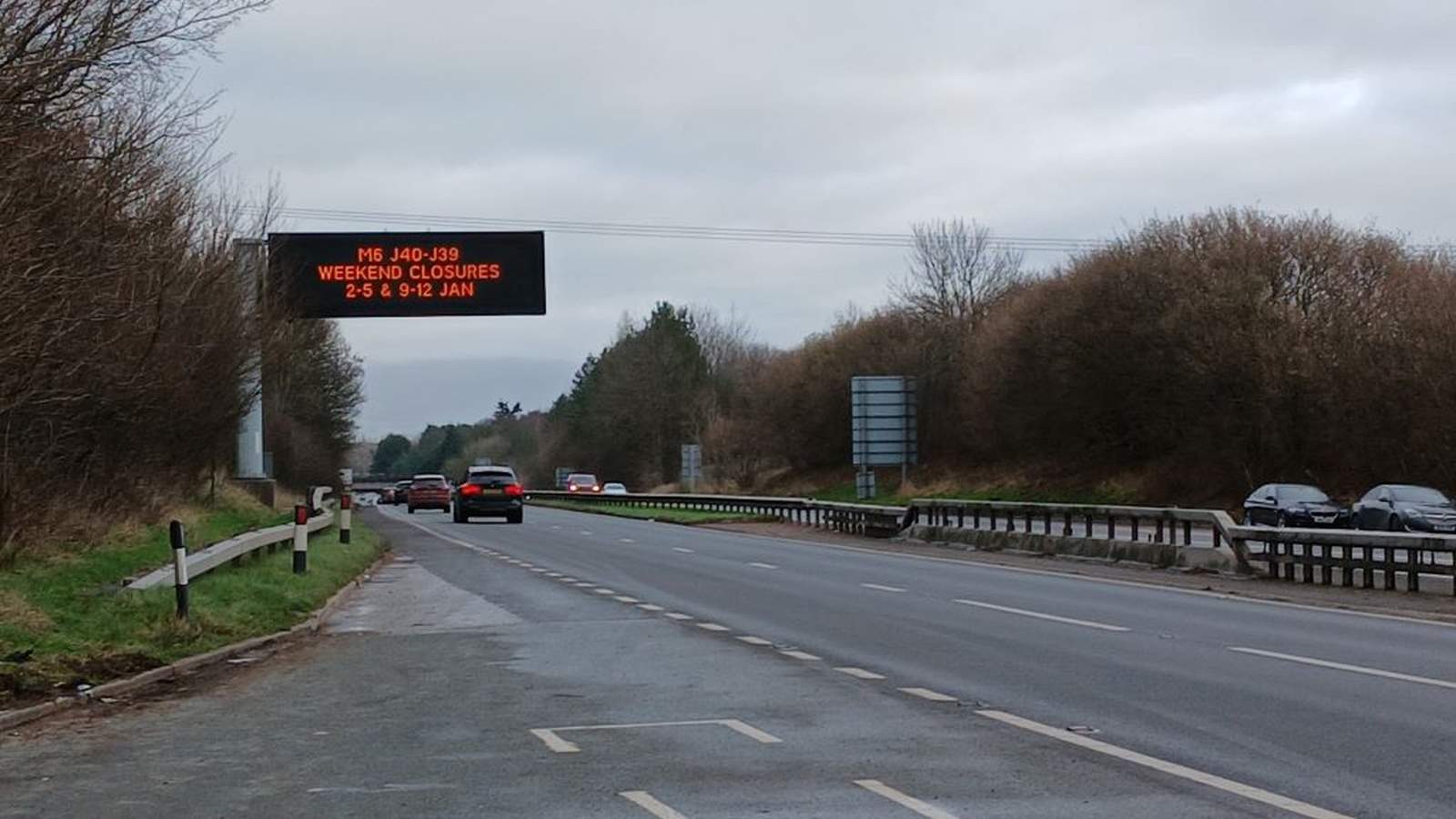
- M6 closed in Cumbria between J39 and J40 for bridge replacement from Jan 2–5, with a second closure Jan 9–12.
- Major diversions in place; northbound via A6, southbound via A66 and A685.
- M6 northbound in Cheshire closed Jan 2 due to serious crash; reopened after investigation and recovery.
M6 Closures in Early January 2025: What’s Happening?
The start of 2025 has brought a wave of disruptions to one of the UK’s busiest motorways, the M6. As millions return to work and travel after the festive period, closures in both Cumbria and Cheshire have caused widespread delays, rerouted journeys, and forced drivers to rethink their plans. The reasons are twofold: essential bridge replacement works and a serious collision, each impacting thousands of motorists and rail passengers.
Major Engineering Works: Bridge Replacement at Clifton
In Cumbria, the M6 is closed in both directions between Junction 39 (Shap) and Junction 40 (Penrith) from 8pm Friday, January 2, until 5am Monday, January 5. This closure is required for Network Rail and its delivery partner Skanska to replace the aging Clifton railway bridge, which is nearly 60 years old. The previous bridge, suffering from weight restrictions that limited it to a single train at a time, has long been a bottleneck for rail services.
The new bridge, a massive 130-meter, 4,200-tonne structure, is being installed above the motorway near Penrith. Removal of the old bridge and installation of the new one began on New Year’s Eve, marking a significant logistical feat. During this period, no trains will operate on the West Coast Main Line between Oxenholme and Carlisle, with rail services expected to resume only on January 15 (Cumberland & Westmorland Herald).
To minimize future disruptions, a second closure is scheduled from 8pm Friday, January 9, to 5am Monday, January 12. National Highways strongly advises drivers to avoid the affected M6 stretch if possible, plan ahead, and allow extra time for journeys. Clearly marked diversions are in place to help reroute traffic.
Diverting the Flow: Detailed Diversion Routes
During the Cumbria closure, northbound drivers must leave the M6 at Junction 39, follow the A6, and rejoin the motorway at Junction 40 via the Kemplay roundabout (North West Evening Mail). For southbound traffic, the situation is more complex:
- All southbound HGVs are diverted from Junction 40 onto the A1(M) at Scotch Corner via the eastbound A66.
- Other southbound drivers leave at Junction 40, follow the eastbound A66 to Brough, join the southbound A685, and rejoin the M6 at Junction 38 (Tebay) via Kirkby Stephen.
Additional local changes include temporary signals at Junction 40, closures of entry from Ullswater Road (A592) during peak weekend hours, and pedestrian access maintained at key roundabouts.
Crash in Cheshire: Emergency Closure and Traffic Management
Meanwhile, in Cheshire, the M6 northbound was closed between Junction 16 (Stoke-on-Trent) and Junction 17 (Congleton) due to a serious collision at 9:20pm on Friday, January 2 (Manchester Evening News). Cheshire police and National Highways responded promptly, instituting a diversion route and managing traffic at the scene. Investigations and vehicle recovery continued until the early hours, with the road reopening after a thorough clean-up at 4am, ahead of the expected 10am timeline.
The diversion for the Cheshire closure followed a solid triangle symbol on road signs, routing vehicles via the A500, A5020, and A534 before rejoining the M6 at Junction 17. National Highways urged drivers to plan ahead and allow extra time, as delays were significant during the closure.
Wider Impact: Rail and Road Travel in Turbulent Weather
The closures come as severe winter weather grips the UK, with the Met Office issuing a “risk to life” warning due to heavy snow. Disruptions have rippled across rail, air, and ferry services, compounding the difficulties for travelers (Independent). On the roads, congestion is expected to build throughout the weekends, especially on routes linked to the M6, M25, M4, and M60. For rail passengers, the West Coast Main Line’s closure north of Oxenholme means longer journeys and reliance on replacement bus services. Ferry routes have also faced cancellations due to weather, though some major crossings like Dover-Calais remain unaffected.
Advice for Drivers and Travelers
National Highways and local authorities emphasize the importance of checking travel updates before setting out, considering alternative routes, and being prepared for longer journeys. For those unable to avoid the affected M6 sections, diversions are clearly signposted, but patience will be required as traffic volumes spike during the closure windows.
For rail users, the bridge replacement marks a crucial upgrade that promises to improve reliability and capacity in the future, even as it causes short-term inconvenience. Both road and rail closures are part of a wider push to modernize infrastructure and ensure safety, especially during periods of severe weather.
The story of the M6 closures in January 2025 is one of disruption, resilience, and adaptation. While the immediate impact has been significant—delays, detours, and frustration—the bridge replacement work represents a necessary investment in long-term reliability for both road and rail. The coordinated response by emergency services and transport authorities highlights the scale and complexity of managing such vital infrastructure under pressure, especially as the UK grapples with harsh winter conditions.